The Wise Virgins
Leonard Woolf is tegenwoordig vooral bekend als de echtgenoot van, maar zelf heeft hij ook de nodige romans, essays en autobiografische werken gepubliceerd. The Wise Virgins (1914) is zijn tweede roman, geschreven in de eerste jaren van zijn huwelijk met Virginia Stephen. De personages waren zowel voor zijn eigen familie als zijn kersverse schoonfamilie dermate herkenbaar dat dit tot de nodige afkeuring leidde.
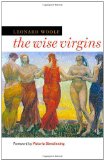
In het boek wordt hoofdpersoon Harry Davis, student op de kunstacademie, verliefd op Camilla, telg uit een intellectuele Londense familie, die zich eveneens toelegt op schilderen. Als zoon van een joodse zakenman acht Harry zichzelf echter te min voor deze jongedame, en hij laat zich dan ook de interesse van zijn wat gewonere buurmeisjes welgevallen. Toch kan hij Camilla maar moeilijk uit zijn hoofd zetten.
Getuige het verslag van een roeitochtje op de Thames, op initiatief van Harry’s moeder die de betrekkingen tussen haar zoon en het buurmeisje Gwen aanmoedigt. Er wordt in twee boten geroeid. Harry en de dominee, die om de hand van Gwens zuster Ethel dingt, roeien in de ene en Harry’s vader en de derde zus May, een stoere, roeien in de andere. De moeder van Gwen, mevrouw Garland, en Harry’s zus Hetty bedienen het roer.
“The two boats were to proceed up the river as near to one another as possible, so that conversation might be general. But it is not really possible to talk across two scull lengths, and the attempt to do so caused continual irritation to the scullers and alarm to the passengers by the sudden clashing and interlocking of sculls owing to the erratic steering of Hetty and Mrs. Garland. After this had happened two or three times, and Mrs. Davis in one boat and Ethel in the other had got well splashed in the process of disentangling the sculls, it was decided to proceed at wider intervals.
The conversation in May’s boat was not altogether a success. Mr. Davis, when he took off his coat to row, disclosed braces, a most depressing sight to suburban young ladies on a river party. To May and her two sisters he was an old man, but being a new phenomenon ought to be entertained by them. Their attempts at conversation disclosed the fact pretty soon that he was not a lady’s man. With him silence took the place of small talk; he was a utilitarian, and even an afternoon on the river, with four ladies, could be put to some more practical use than talking: you could get as much exercise out of it as possible by sculling. This he proceeded to do, carefully inquiring from time to time of May whether he was sculling too fast for her. Though she saw the small round bald patch on the top of Mr Macausland’s (de dominee, GK) head drop away further and further behind them, and though two blisters very soon formed on her hands, she assured him that she liked the exercise.
(……..ondertussen houdt in Harry’s boot zijn moeder het gesprek gaande…..)
The conversation was here interrupted by the boat arriving at the entrance to a lock. All attention on the men’s part was now needed for getting the boat safely through, and on the ladies’ part for staring at the occupants of all the other boats surrounding them. The passage was accomplished in safety, and waiting for them on the other side they found May’s boat. “I say, you have taken a time,” she remarked, looking at the vicar.
(……..men gebruikt aan de wal een uitgebreide thee, Harry en Gwen maken een ommetje, waarna in de schemering de terugtocht wordt aanvaard….)
Conversation ebbed and sank quietly. The stillness of the summer evening and the pale green sky settled down on them. Their souls were soothed – just as they are soothed in that half-minute, which seems an eternity, before we sink into sleep – by the dim vision of rippled water and waving trees, shadowy houses and shadowed lawns, gliding by, gliding by, gliding by.
The boats shot on in rhythmical glides over the pale green path that the black trees and their still blacker shadows upon the water left reflected in the river. Nothing could be heard but the regular creak of the oar against the rowlock, the ripple that seemed to whisper against the bows, a little splash now and then as the blades dipped, and sometimes away out of the darkness, melancholy almost and visionary, the sounds of voices and laughter. Gwen at any rate allowed herself to glide along into a contentment, a happiness that was new to her. Her walk with Harry had excited her more than she herself realised. In the unpacking and packing up , a new special link of intimacy between them had made her meet his eye among the others wit a smile. All rivers at night are melancholy, sentimental, sad, like emblems of the mystery and unreality of human things. Under their spell we seem to see things larger than our own small selves. This languorous sadness only softened Gwen’s excitement into a quiet happiness, and as she saw Harry’s face, moving rhythmically backwards and forwards over the oar, softened by the pale light, but set and firm, sad and reflective, she still felt the link of the intimacy between them.
Harry himself was in a trance. There was a vague uplifting of spirits as he gave himself to the rhythm of the oars and boat. Forward, backward, forward, backward his body swung, the silver-green water glided by him and dripped from the blade; forward, backward, forward, backward, the great black shadows glided by. He heard laughter across the water die away; the whistle of a train far away across fields and trees; the deep enveloping silence. Forward, backward, forward, backward; why not row Camilla like this? He sank deeper intot dreams that he was rowing Camilla like this—-”
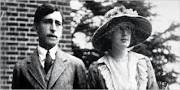
Prachtig wordt in deze passage getoond hoe de conventie toentertijd dicteerde om ondanks fysieke inspanning keurig in het pak te blijven en wellevend te converseren. Aan Harry’s vader lijkt een goed wedstrijdroeier verloren te zijn gegaan. Nog fraaier vind ik de manier waarop Woolf ook in de vorm het ritme van het roeien laat binnen sijpelen, een ritme waarop de lezer net als de personages aan boord langzaam wegdroomt naar een wereld waarin conventies de wegen van het hart niet langer in de weg staan.
En ja, tenslotte heeft Leonard (i.t.t. Harry die Gwen trouwt) het hart van zijn beminde wel veroverd. Wellicht dat een roeitocht op de Thames hem dat heeft opgeleverd. Al sluit ik niet uit dat Virginia Woolf vooral de weergave in taal hogelijk gewaardeerd heeft!
Greet Kuipers